
In response to Australia’s explosion of data centres and their increasing demands on the power grid, regulators have proposed changes to rules around grid connections to ensure that large electricity users don’t threaten the stability of the power system.
The scale of data centre demand and why the rules are changing
Supporting our energy system as it copes with this exploding demand is crucial to making sure that our services, workplaces and homes continue to have access to stable energy.
According to the Australian Energy Market Operator (AEMO) report, data centre growth is accelerating at a rate that the existing electricity grid framework cannot accommodate:
- In the financial year 2024/25 (FY25), Australian data centres consumed about 3.9TWh — equal to about 670 times what an average household of four uses per year.
- 98% of that energy came from the NEM/grid.
- Under various scenarios, AEMO projects data centre energy consumption to grow by a minimum 25% per year, reaching 12.0TWh by FY30 and 34.5TWh by FY50.
These trends have informed the Australian Energy Market Commission’s (AEMC) proposed changes to grid connection requirements, set out on 12 March 2026 in its draft rule change on improving NEM access standards – Package 2, and summarised in its announcement.
Why do data centres need so much power?
Hyperscale data centres such as artificial intelligence, cloud computing, and big tech consume a lot of power because they operate vast numbers of servers around the clock, all the time. Their demand can jump suddenly when servers ramp up and cannot tolerate outages; even milliseconds matter.
Data centres are made up of:
- servers
- data storage
- networking equipment
- batteries and backup generators
- cooling and environmental control
- lighting, plumbing
- attached offices.
The energy that each component needs varies between types of data centres, but all types use significant energy.
Summary of AEMC’s proposed changes
New standards for allowing facilities that use a lot of energy, like data centres, access eastern Australia’s grid, the National Electricity Market (NEM). The purpose of the new standards is to maintain the grid’s stability, the AEMC has proposed changes to grid connection rules for large electricity users like data centres.
The proposed reforms would also apply to any large electricity user that meets the new threshold for large loads, such as major hospitals, universities, sports and entertainment venues, and other energy‑intensive precincts — particularly where they rely on power‑electronics‑based systems or have large, concentrated electricity demand.
Under the proposal, affected facilities would need to:
- remain connected during grid disturbance
- operate stably during faults
- restore demand quickly once conditions stabilise.
Meeting these requirements may involve additional control systems and grid‑support equipment, which increases connection complexity and costs for some projects.
The proposal would also introduce clearer and more consistent regulation for large electricity users. While loads above around 5MW are often treated as “large” today, this approach sits outside the formal rules.
The draft reform would formally define large loads as those above 30MW to provide greater certainty around which projects are captured by the new standards.
The opportunities of the data centre boom
As usual, with challenges come growth opportunities. Australia is attractive as a home for data centres because it has:
- a lot of land available in strategically helpful locations, such as within Renewable Energy Zones (REZs)
- rapidly growing renewable energy penetration exceeds 40% across the National Electricity Market
- geopolitical stability
- proximity to the Asia-Pacific region
- status as a trusted Five Eyes jurisdiction.
Some possible solutions
To keep building big data centres on Australia’s renewables‑heavy grid, they need to connect in a way that supports the system, rather than only bringing more demand.
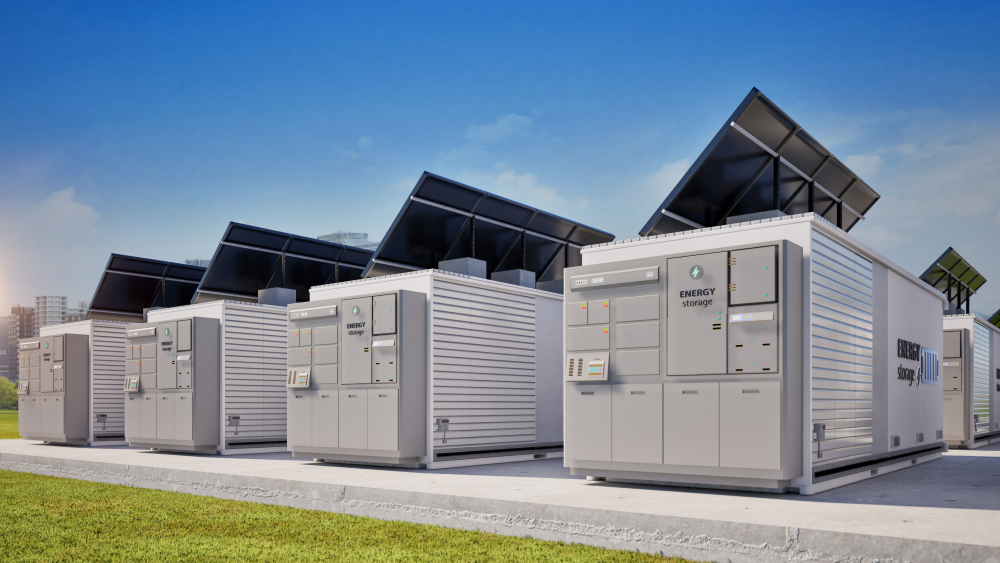
Maybe we’re biased because we’ve worked on so many big battery energy storage systems (BESS), but we think they’re a powerful solution to these new connection rules. If we then add a grid-forming inverter to the mix, that will enable the BESS to help keep the NEM stable by firming the NEM’s energy peaks and troughs.
A grid-forming inverter also allows the BESS to operate on its own during outages, as well as having black-start capabilities and support for grid disturbances.
Importantly, grid-forming inverters could potentially streamline the grid connection process for hyperscale data centres by delivering system strength benefits, dynamic reactive support, and voltage control. This could enable self-remediation in weak nodes.
They also can simplify and speed up the connection process. Because grid-forming BESS can stabilise the system themselves, they can meet AEMO’s system-strength requirements without needing additional equipment
The future of data centres in Australia
Policymakers are increasingly exploring whether data centre proponents should contribute to the infrastructure required to support their developments.
Recent government inquiries into the data‑centre sector have highlighted several key areas of focus, including the scale and growth trajectory of data centres, patterns of geographic clustering, and whether state planning frameworks, infrastructure and resources are adequately prepared for the pace of anticipated growth.
While no single funding model has been settled, these themes are important as they raise potentially complex interactions between state and federal regulatory regimes:
- planning frameworks
- electricity demand and emissions
- water usage and cooling requirements
- local environmental and community impacts.
As a result, the Inquiry may recommend that data centre developers contribute to infrastructure costs, and stakeholders involved in data centre projects should therefore pay close attention to the inquiry.
Next steps
If you want to make a submission about AEMC’s draft reforms, you need to do so by 7 May 2026.
If you want to find out the best way to integrate a BESS or other technology to your data centre project, click on the Enquire Now button, so we can work with you.