
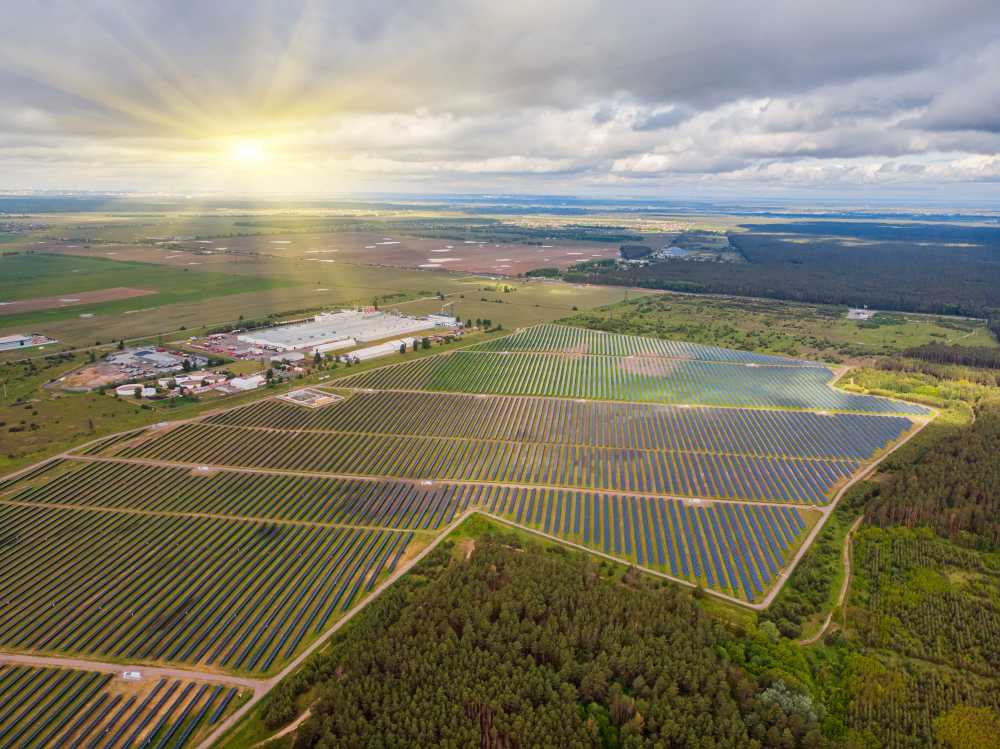
Australia receives more solar radiation per square metre than any other continent, supported by favourable climate conditions and large areas of available land.
These natural advantages mean solar projects in Australia can generate more electricity, more consistently, than in many other markets. As a result, Australia now has the highest rate of world rooftop solar adoption, with more than 4.4 million solar installations and the average system size growing to around 6.6kW.
What makes Australia’s solar resource globally competitive
Australia’s climate makes the country an ideal place for rooftop solar generation, thanks to abundant sunshine, favourable geography, and large areas of available land.
High solar radiation across the continent
In simple terms, more sunlight means solar power systems can generate more electricity from the same installed capacity.
This is usually measured through solar irradiance, which is how much sunlight reaches a given surface that is measured in watts per square metre (W/m²). Standard Test Conditions (STC) is used to rate solar panels, defining 1,000 W/m² as the reference point.
On a clear summer day in Australia, irradiance levels can reach around 900–1,100 W/m² at peak sunlight hours. Over time, this sunlight builds into solar energy generation, usually measured in kWh/m² per day.
Here’s the average daily solar radiation levels varied by location:
| City | Average solar radiation |
| Hobart | 4.0kWh/m²/day |
| Melbourne | 4.4kWh/m²/day |
| Canberra | 4.5kWh/m²/day |
| Sydney | 4.6kWh/m²/day |
| Adelaide | 5.0kWh/m²/day |
| Brisbane | 5.2kWh/m²/day |
| Perth | 5.5kWh/m²/day |
| Darwin | 6.4kWh/m²/day |
Climate conditions: clear skies and low cloud cover
Most cities in Australia — especially across inland and western regions — have long sunny days, clear skies, and generally dry weather throughout the year. These factors reduce cloud cover, snow, and other weather factors that affect solar panel performance.
Lower humidity and fewer weather disruptions also allow more sunlight to reach solar panels, increasing energy output and improving efficiency over time. Compared with colder or cloudier areas, Australia benefits from more stable and predictable solar sources.
Geography and land availability
Australia’s geography also plays a major role in its strong solar performance. Large areas of open land and high sunshine levels give developers more flexibility when choosing locations for solar projects.
Sydney is one of the best locations in Australia for solar panel installations due to its strong sunlight exposure throughout the year. High sunshine levels create favourable conditions for both solar generation and battery storage performance. More broadly, Australia’s ideal solar conditions have played a major role in the rapid growth of solar adoption nationwide.
This means, developers can select locations that balance resource quality, grid access, and construction considerations, rather than being constrained to limited high-resource zones.
From solar resource to project economics
Higher irradiance drives higher energy yield
With Australia’s very high irradiance levels, every megawatt of installed capacity typically gets more output than elsewhere.
This is a key advantage for developers and investors. Higher energy yield improves overall project performance and makes it easier to get strong results from the same investment. In practice, it means solar projects in Australia can do more work with the same system, simply because of better natural conditions.
Consistent generation improves predictability
The stable weather patterns and clear-sky days consistency makes a real difference when it comes to forecasting. When output is more stable day-to-day and across the year, it’s easier to estimate how much energy a solar project will produce. That’s important for planning, reporting, and overall project management and financial perspective.
More predictable generation reduces uncertainty, which supports smoother grid integration and gives investors greater confidence in long-term performance. It means fewer surprises and more reliable outcomes over the life of the project.
Australia’s role as a leading solar market
Solar has become a major part of the country’s energy mix, with 4.2 million rooftop solar systems installed across homes and small businesses nationwide. In fact, Australia is considered a global leader in solar uptake per capita.
It’s showing how natural solar sources met just how quickly the technology has been adopted at scale. This allows large-scale solar to continue to expand, creating a steady pipeline of opportunities for investors and developers.
As the market grows, so does the need for experienced solar advisors to guide solar projects from early-stage assessment through to delivery. At Arche, we support clients in planning and delivering solar and battery solutions that align with project objectives and long-term performance.