
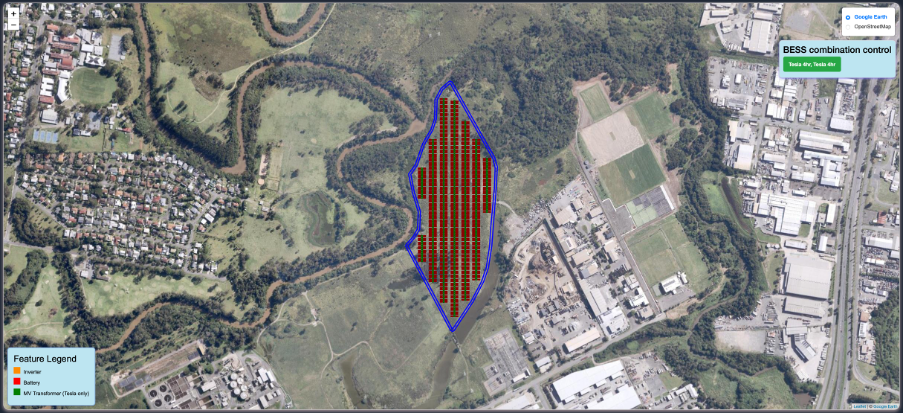
A concept study or design is not the finish line for early-stage development — it’s the starting point. It gives you a broad vision of what’s possible, backed by preliminary engineering and commercial framing. The hard work comes next to transform a promising idea into a bankable, buildable, and operable asset.
In the energy sector, the challenge is tough because there’s a lot to manage, from the technical side and business planning to navigating complex and shifting regulations, community needs, supply chains, and financing. All of it has to come together smoothly so we can reach a Final Investment Decision (FID).
From “can we?” to “how will we?”
Once a project’s practicality is confirmed by a rigorous concept study, the next step is to design an execution pathway using three perspectives brought together from the start, not treated as separate, sequential steps.
Technical lens
After the concept study, projects move into pre-FEED (front-end engineering design) or FEED, an early technical engineering study phase that turns high-level ideas into solid technical foundations. The goals are to sharpen cost estimates, strengthen feasibility confirmation, shape procurement strategy and reduce design risks.
These stages are essential in the energy sector for offshore wind, oil and gas, and increasingly for battery energy storage systems (BESS), that could cover optimising the battery architecture for cycling regime, augmentation strategy, and thermal management.
Commercial lens
A strong commercial strategy goes beyond simple headline metrics like Levelised Cost of Electricity (LCOE) or Levelised Cost of Storage (LCOS). It’s about building a revenue model that reflects how the asset will actually earn money.
In Australia’s NEM, day-ahead arbitrage is now the main source of battery income, with AEMO reporting a 97% year-on-year jump in Q2 2024. Frequency Control Ancillary Services (FCAS) revenue is still valuable, with steady growth of around A$1.1 million.
Developers also use hedging and network services to help stabilise cash flow, while testing how the project performs under price swings and curtailment risk. All of this helps turn broad economic assumptions into a bankable business case.
Regulatory lens
Grid-connection and regulatory rules can really shape how a project is designed and how long it takes. In Australia, meeting AEMO’s technical and system-strength requirements is a must. Failure to complete them can lead to expensive fixes or network upgrades. Getting on top of these regulations early helps keeping the project on track for investment and delivery.
Teams that bring these streams together early are about making faster, better decisions. The goal is not more analysis, but better decision velocity from concept to execution.
Build confidence, not just detail
Feasibility and due diligence can often feel like documentation exercises, but project sponsors who want to get FID faster should take this stage with a focus on building confidence and giving the board, investors, and counterparties what they need to comfortably say ‘yes.’
Evidence-based assumptions
Stakeholders need solid proof before making an investment. That means developers must back every major assumption with proper technical, environmental, and site studies. This includes resource yield, subsurface conditions, noise impacts, biodiversity effects, and overall buildability.
In-depth, finance-grade studies at a suitable level of detail for due diligence are also needed. And for grid-connected projects, it’s also vital to include realistic fallback plans for potential connection delays, protecting cash flow even if approvals take longer than expected.
Bankability markers
To be called bankable, a project must meet financiers’ expectations on contract structure, guarantees, and long-term reliability. That also means aligning contracting strategy (EPC or multi‑package) with clear performance warranties and a comprehensive O&M plan to reassure lenders the asset will deliver as promised.
For battery projects, planning for capacity drop-off and including money for upgrades or replacements is a must so the system meets targets over its whole life.
Transparent risks
Instead of vague monitor flags, you should catalogue each risk and attach actionable, costed, and time-bound mitigation plans. Address potential issues with clear risk management steps swiftly to reduce uncertainty and demonstrate control over project outcomes. The approach that builds confidence because decision-makers can see risks being actively managed, not just observed.
Anticipate complexity and design for adaptability
Policy changes, supply-chain constraints, land availability, and community priorities are reasons that your engineering choices matter more than ever in the evolving energy sector.
Supply-chain realism
Bottlenecks in supply chains like transformers, switchgear, batteries, and inverters can become the project’s critical path. Long‑leads for these items can take about 2–4 years to procure, even doubled for a global shortage, with prices surge 60–80% from 2020. Thus, planning for logistics and equipment ahead of time is important to avoiding costly delays.
Policy and market evolution
Markets and policies shift as technologies mature and government policies shift. It’s therefore important to design your asset with flexibility to keep up with future upgrades. For example, in a BESS project, a battery commissioned for arbitrage today must be ready to pivot to services like frequency control or capacity markets if those signals become more lucrative.
Projects like hydrogen pilots should be flexible too, capable of scaling up electrolysis or switching end-use based on evolving policy and demand.
Community and land access
The Department of Climate Change, Energy, the Environment and Water (DCCEEW) advises energy developers to engage with communities o ensure the energy transition benefits both the energy system and local people. This helps build social licence with the goals of building trust, speeding up approvals, and shaping project design, which are drivers of a project’s timeline. When engagement is done well, communities become partners, not obstacles.
Think like an owner from day one
Even if you are in development mode, it’s best to adopt the mindset of a future asset owner.
Operations‑first decisions
Choose technologies and setups that are easy and cost-effective to operate and minimise lifecycle complexity. For example, for solar‑plus‑storage, DC‑coupling with standardised systems reduces lifecycle complexity compared to custom configurations, and many believe will soon become the industry standard. It also simplifies maintenance and lowers future operational risk.
Performance and reliability
To reflect how the system will operate under real-world conditions, place realistic targets for availability, degradation, and round-trip efficiency (RTE). Even a 1% difference in RTE can mean energy lost or extra capacity needed that later will affect revenue and bankability. Also, match Service Level Agreements (SLAs) to actual revenue performance, not just technical specs.
End‑of‑life and circularity
Think about what the future owner will face when the asset’s operating life ends. Batteries degrade over time, so plan ahead for augmentation, recycling, and decommissioning right from the financial model. These aren’t footnotes but costed realities that lenders increasingly scrutinise. A credible plan for lifecycle management shows you’re thinking beyond commissioning and building a durable business.
Illuminate the path with exemplars
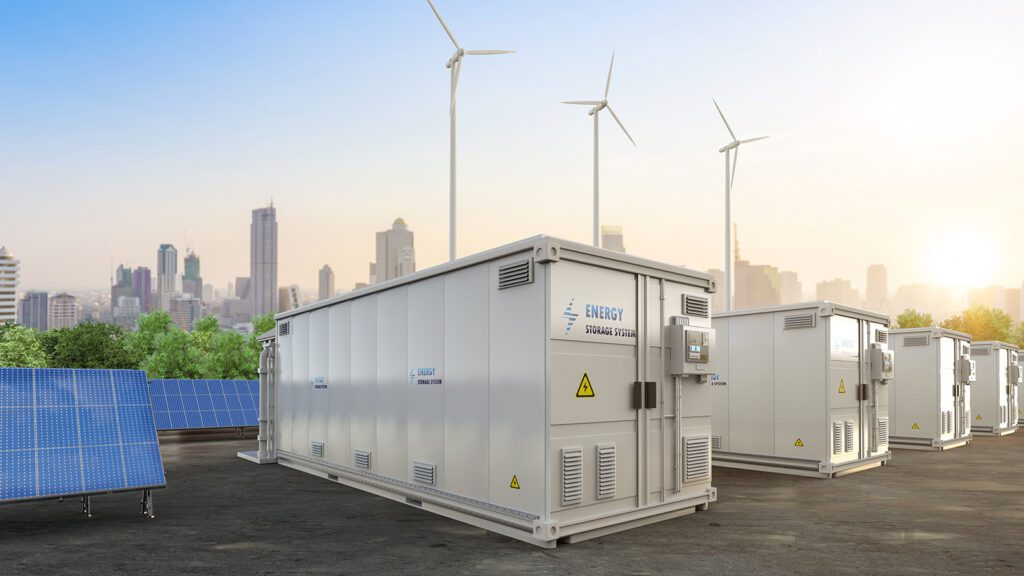
Below are composite industry examples that illustrate how strong execution after the concept study changes outcomes.
Example 1 — utility‑scale BESS, 200MW/400MWh
Challenge: Your early study showed good economics (low LCOS and arbitrage gains), but bankability was at risk due to uncertainty in grid connection and whether you could add more capacity later (augmentation).
Approach:
- Planned the project in stages, so they can add more battery modules later.
- Made sure performance guarantees on battery usage matched how it would be used (the duty cycle).
- Chose two different inverter suppliers to reduce the risk of supply chain delays.
- Brought forward grid modelling early with the network operator to align with technical limits.
Outcome: The project reached FID using a mixed contracting approach. It had clear augmentation plans, used revenue from multiple services (energy arbitrage, FCAS, network support). Because the project’s bottleneck shifted to civil works. Rather than waiting for imported equipment, it could stick to the schedule.
Example 2 — solar farm with DC‑coupled storage
Challenge: Early work showed upside in using DC‑coupled storage to capture energy clipped by the solar inverter and add firming capacity. But you underestimated power curtailment and interconnection limitations.
Approach:
- Shifted battery dispatch to prioritise system services when clipping was high.
- Added spare transformer capacity (“headroom”) to ensure the system could handle full output.
- Refined civil works to avoid delays in wet season months.
Outcome: They improved net margins by capturing more value from FCAS and reducing curtailment. A project benefits package tailored to the community also sped up approvals.
Example 3 — small‑scale firming asset
Challenge: You needed to show that a flexible gas peaker had a future role alongside renewables, even as policy shifted toward cleaner energy.
Approach:
- Included local renewable curtailment data in how they modelled power dispatch.
- Allowed for a future storage hybrid in the plant design.
- Used flexible contracts that let them shift to capacity payment models when policy changed.
Outcome: The project got financed with loan terms tied to emissions performance and flexibility, ensuring the project remained viable under different policy scenarios.
Make approvals and grid connection real and early
Approvals and grid connection are program drivers, not back‑office tasks.
- Approvals roadmap: Define each statutory milestone, from environment, heritage, noise, traffic, to hydrology with realistic time estimates (e.g. 3–6 months per permit) and sequence them logically. Add buffers for seasonal surveys or delays (assessments can stretch over 17 months).
- Grid strategy: Use connection‑study outputs as early design triggers. Make sure that your design meets system strength standards, ride‑through performance and reactive‑power obligations under the NER, and align with AEMO’s technical envelope. Begin engagement with AEMO or the network operator early to avoid redesigns later.
- Documentation discipline: Prioritise clarity as concise, consistent and defensible filings earn faster approvals. Good structure and repeatable templates can reduce review loops.
Turn procurement into a strategic lever
Procurement is where the market meets your design. Astute project developers use the market to refine risk allocation and strengthen project resilience.
- Packaging strategy: Choose between EPC, EPCM or multi‑package delivery based on market depth and interface complexity. EPC offers single-point responsibility, shifting most risk to the contractor. EPCM lets you retain flexibility and control while managing interfaces yourself. For storage, ensure that roles are clearly defined: who handles EMS, SCADA, and integration and performance testing.
- Performance risk allocation: It’s about linking project risks, like battery availability and efficiency, directly to financial outcomes. In a BESS project, this step ties liquidated damages and performance guarantees to the metrics that actually influence revenue (e.g. battery uptime, response speed, and efficiency).
- Commercial resilience: Look for alternative suppliers for items with long delivery times such as transformers or inverters. You can bundle orders or lock in delivery slots early to buffer supply-chain volatility. Benchmark pricing and scope rigorously to maintain competitive tension without damaging vendor relationships.
Finance with clarity and credibility
Investors don’t fund optimistic guesses, they fund well-managed risk. So your financial case needs to be credible, with realistic scenarios, verified costs, and sustainability commitments backed by real evidence.
- Revenue modelling: Prepare strong scenarios that stress-test your project against spot price volatility, curtailment, battery degradation, and unplanned outages. Then show how your operations plan responds to reassures financiers that your revenue won’t fall apart when plans get tough.
- Cost realism: Use up-to-date and real-world pricing for all requirements, including equipment, civil works, commissioning, logistics and contingencies. Flag any risks of cost escalation. Show how future upgrades or end-of-life costs will affect your financials.
- ESG alignment: ESG is no longer optional. Investors now look for measurable ESG commitments because they improve project resilience and compliance. This includes targets for emissions, recycling and end-of-life recovery, and biodiversity impacts. All is documented in your financing and governance processes.
What “great” looks like post‑concept phase
- A single integrated program linking engineering, approvals, grid, procurement, and finance with clear gates and decision rights.
- A design that reflects how the asset will actually earn money and operate over its life, so It’s not just to show how it will be built.
- Stakeholder engagement that shapes the project and shortens timelines.
- A procurement strategy that reduces interface risk and preserves flexibility.
- A financing case that survives stress tests and policy shifts.
How Arche Energy helps
Arche Energy guides projects from concept to commissioning with discipline and pace. We bring:
- Technical leadership: Pre‑FEED and FEED for renewables, storage, and firming assets; grid modelling and connection strategy; basis‑of‑design development and option selection.
- Commercial rigour: Revenue stack modelling, contract strategy, bankability frameworks, and investment‑grade risk registers.
- Approvals and stakeholder pathways: Clear, sequenced roadmaps for permitting and community engagement that protect your schedule.
- Procurement and delivery: Packaging strategies, vendor engagement, performance guarantee alignment, and owner’s engineer support through commissioning.
- Owner‑operator mindset: Whole‑of‑life planning for augmentation, O&M, recycling, and end‑of‑life, embedded from day one.
If you’ve just completed a concept study and want to convert momentum into a bankable, buildable project, get in touch to discuss your pathway to FID and to an asset that performs for decades.