
Australia is in the middle of two crucial energy transitions.
The first is the transition from ageing coal-fired generation to including more renewables, battery storage and firming electricity supply. The second transition is only just beginning to attract mainstream attention: the rapid growth of hyperscale data centres.
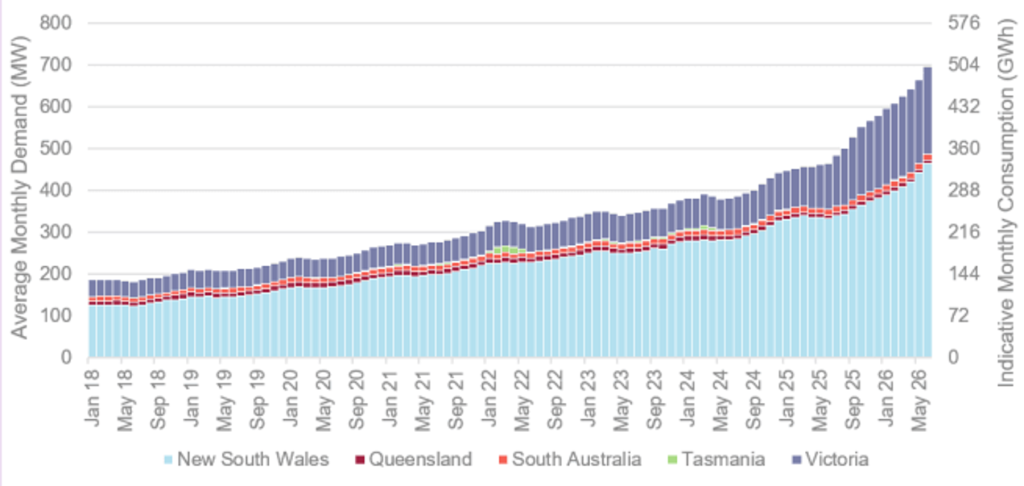
As AI utilisation accelerates, data centres are emerging as one of the fastest-growing sources of electricity demand in the National Electricity Market (NEM). The implications for generation infrastructure are significant.
For developers, utilities and large energy users, one technology is increasingly moving back into focus: gas turbines.
The scale of Australia’s data centre expansion
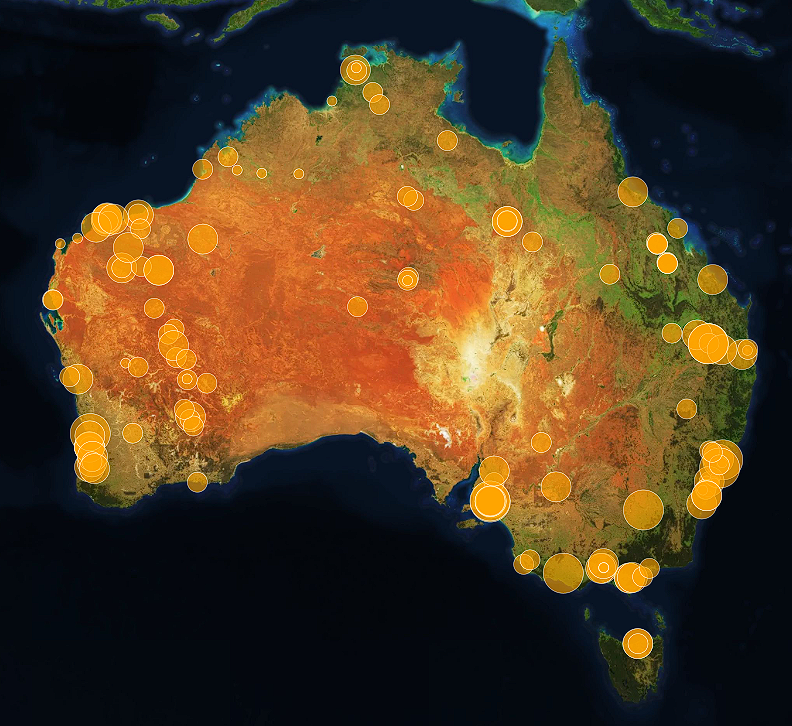
Australia has become a highly attractive destination for data centre investment. Major global technology firms are expanding local cloud and AI infrastructure, while developers continue to progress large-scale projects across Sydney, Melbourne and other strategic locations.
AEMO reported that 11 large data centre projects representing approximately 5.4GW of maximum demand were progressing through transmission connection processes as of early 2026. At the same time, forecasts indicate data centre electricity consumption could grow from around 2% of NEM demand today to approximately 6% by 2030 and much higher over the longer term.
Importantly, AI workloads require substantially more computing power than conventional cloud services. Industry analysis referenced by ABC News suggests AI-focused facilities could account for around 70% of data centre demand growth between 2025 and 2030.
This growth is creating an entirely new category of electricity demand: large, concentrated loads requiring exceptionally high levels of reliability.
Why reliability matters more than ever
Unlike many industrial loads, data centres cannot simply shut down when renewable generation falls or electricity prices spike.
Hyperscale facilities operate 24 hours a day and are designed around stringent uptime requirements. Even brief interruptions can have significant operational and financial consequences.
As a result, data centre operators increasingly seek energy solutions that provide:
- Continuous power availability
- Fast response capability
- High system resilience
- Dispatchability during renewable shortfalls
- Confidence during extreme weather events
Renewables and batteries play a critical role in meeting these requirements, but they do not solve every challenge.
Long-duration periods of low wind and solar output remain a genuine system risk. As Australia’s coal fleet retires, firm dispatchable generation becomes increasingly valuable. This is where gas turbines enter the discussion.
Gas turbines are becoming the bridge technology
Around the world, particularly in North America, the AI boom has already spiked demand for gas-fired generation. Australia appears likely to experience a similar dynamic. Here are the key advantages that gas turbine generation offers data centres.
Fast
Because data centres are faster to design and constructed than large generation projects, there’s a significant risk that electricity demand will increase well before there is sufficient renewable generation to meet that demand.
Dispatchable
Aeroderivative and open-cycle gas turbines can start and ramp up quickly to support grids with increasing proportions of intermittent generation.
Proven
Having been used commercially for almost a century, gas turbines remain one of the most dependable forms of dispatchable generation available at scale.
Scalable
Facilities can be developed incrementally, matching generation capacity to the growth profile of a data centre campus.
The rise of integrated energy solutions
The discussion has matured beyond renewables versus gas to exploring integrated energy solutions that combine several generation technologies: utility-scale solar, BESS, flexible gas generation — as well as demand management and new transmission infrastructure.
Although the political discussion continues, recent government proposals suggest future data centres may need to underwrite new electricity supply and firming capacity as part of their development pathway.
What this means for project developers and investors
The potential increase in gas turbine demand creates opportunities across the energy value chain. We are already seeing growing interest in several areas:
- site selection for behind-the-meter generation
- hybrid renewable and gas solutions
- gas turbine procurement strategies
- grid connection assessments
- energy market modelling
- long-term fuel supply arrangements.
As Australia’s data centre pipeline continues to expand, project developers will need to make increasingly sophisticated decisions about how reliable power is secured. Those decisions will not be driven solely by energy costs. They will also be driven by speed to market, system resilience and investor confidence.
Looking ahead
The data centre boom is now one of Australia’s most important drivers of electricity demand growth.
While renewables and batteries will remain central to the energy transition, the requirement for firm, dispatchable generation is unlikely to disappear. In fact, the rise of AI and hyperscale computing may strengthen the business case for flexible gas generation over the coming decade.
We are the leading experts
From Swanbank E to the Lockyer Energy Project to the Brigalow Peaking Power Plant and more, Arche is home to enormous gas turbine generation experience and a depth of technical and energy market expertise that is difficult to find elsewhere.
We can also find, extract, and transport gas and even find non-traditional alternative fuels to feed gas turbines.
Call or click the Enquire Now button to discuss with one of Arche’s experts how we can work together.