
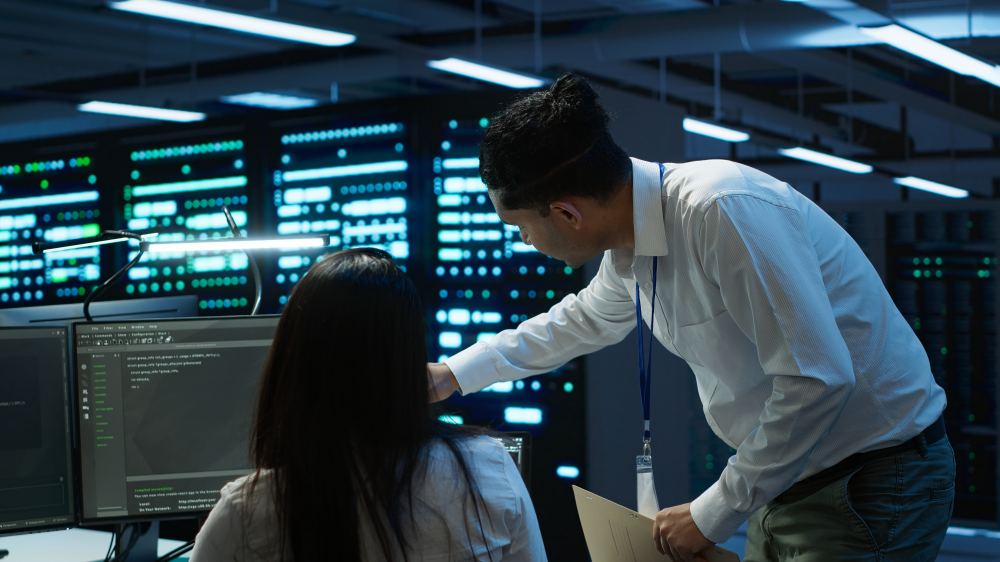
Demand for data centres is increasing rapidly, with capacity projected to grow from around 1.35GW today to between 4.7GW and 7.4GW by 2035. This rapid expansion is placing new pressure on the electricity grid, but it also presents a strategic opportunity.
With battery storage systems to level power demand and maintain power quality, data centre load can support a more reliable and efficient energy system.
Data centre growth is reshaping electricity demand
Demand for data centres is driven by rapid growth in AI, cloud computing, and digital infrastructure for the increasingly digital economy. But there’s one unavoidable challenge, it’s the access to a reliable and secure electricity supply.
In Australia, data centres currently account for around 2% of electricity demand in the National Electricity Market (NEM), with this share expected to grow rapidly as AI and cloud adoption accelerate. AEMO projects this could reach around 6% of demand by 2030, with further growth beyond that.
As demand evolves, electricity systems need a more coordinated and forward-looking planning approach.
Turning demand and challenge into an opportunity
With data centre investment projected to reach $85–$135 billion, this expansion can act as a catalyst for energy system modernisation, particularly through battery energy storage systems (BESS).
BESS is becoming a key enabler of this shift to help data centres integrate more effectively with the grid. By storing excess energy and releasing it when needed, BESS helps balance supply and demand while reducing pressure on network infrastructure.
How BESS supports the grid for data centres How BESS supports the grid for data centres
- Stores excess renewable energy
BESS captures surplus energy generated by solar and wind sources and stores it for later use, helping maximise the value of renewable energy.
- Releases power during peak demand
When electricity demand rises from data centres’ dramatic fluctuation, BESS can discharge stored energy to help meet demand, reduce peak loads, and stabilise demand, and avoid grid failures.
- Reduces pressure on infrastructure
By smoothing demand and supplying energy locally closer to where it’s needed, BESS can reduce grid congestion and can delay the need for costly network upgrades.
BESS improves grid integration and connection outcomes
BESS helps data centres integrate more smoothly with the grid by improving load predictability and reducing system risk. The results include:
- enables faster and smarter integration,
- smooths load variability,
- enforces ramp‑rate limits,
- applies point‑of‑interconnection controls,
- enables a predictable grid‑compliant load profile,
- improves network planning confidence,
- unlocks connection pathways that may otherwise be delayed or denied,
- reduces grid risk amid growing connection queues and planning uncertainty.
As grid infrastructure struggles to keep pace with growing demand, BESS is emerging as a practical way to bridge the gap.
This technology offers more than just a backup power source. It can help manage peak loads, support site energisation, and provide greater flexibility during the early stages of operation. So your data centres projects can move forward while longer-term network upgrades are still underway.
What this means for developers and investors
As demand accelerates, investors and developers are now increasingly prioritising battery storage solutions that can be deployed quickly and efficiently.
Modular, high‑density systems enable faster installation, making better use of constrained sites while delivering the reliability data centres require. Compared to large-scale transmission upgrades, these systems can be delivered in significantly shorter timeframes.
In Australia, where data centre growth is mostly concentrated in New South Wales and Victoria, this is particularly important. With electricity consumption from data centres expected to more than triple by the end of the decade, the ability to deploy flexible, scalable solutions will be critical to managing growing pressure on urban networks.
Growing data centre demand is creating new challenges for energy planning. Arche helps clients evaluate where storage fits into the picture, optimise system design, and understand the impact on project feasibility, cost, and risk.
Explore our previous insights on how data centres benefit from BESS, or use the Enquire Now form to arrange a discussion with one of our experts.