
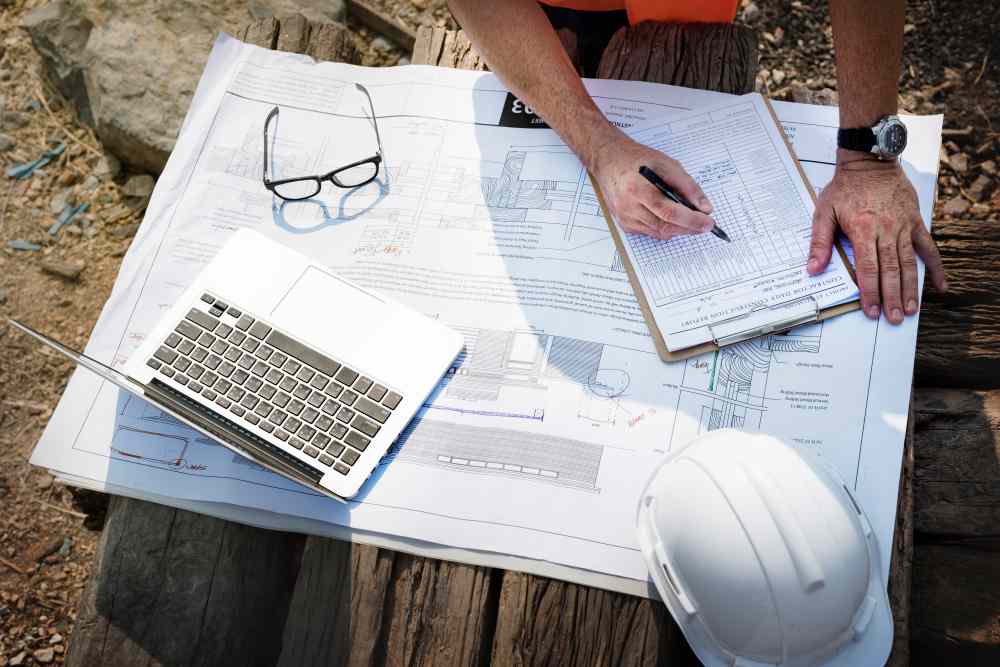
Infrastructure projects such as railways, roads, water, and large power plants are capital-intensive, complex projects that pose several technical, regulatory and financial challenges. These challenges must be planned for and addressed through technical due diligence — an independent assessment of the technical feasibility, regulatory compliance, design, constructability, performance and lifecycle costs of a proposed project.
The process is ideally done at the pre-acquisition, investment and financing phase so that the developers are aware of the condition of the project and its risk areas. Early identification of potential issues helps developers clarify assumptions and reduce uncertainty to make their decisions.
Assess design integrity, constructability, and compliance
One of the biggest challenges in building infrastructure projects is making sure the complex design is practical to build and adheres to construction codes and standards.
Projects fall down in these areas because of inadequate planning and scheduling, leading to incomplete work and infrastructure, schedule overruns, and safety issues. That is why technical due diligence is so necessary for reducing these risks in major infrastructure projects. Here’s how technical due diligence plays a critical role.
Design integrity
The first step in technical due diligence is to review the preliminary design to ensure the master plan, structural solutions, and infrastructure needs are reasonable and feasible. This ensures the design can be implemented within the set limits, which is the early step toward a successful project.
Without technical due diligence, developers often have to deal with design problems and risks, such as unexpected structural issues, inefficient energy use, and construction problems that could cause delays and safety issues, all of which can cost a lot of money.
Constructability
The role of technical due diligence is to evaluate whether the design can be practically built, taking into account factors such as budget, timeline, and when different materials will be available.
In this process we examine construction methods, technical considerations, site-specific challenges, and whether the design can be efficiently executed without significant obstacles. This process helps avoid delays and unnecessary difficulties during construction.
Compliance
Through technical due diligence we verify that the project complies with all relevant local, regional, and federal regulations, including building codes, safety standards, and environmental guidelines. We identify compliance gaps early, ensuring the project meets all essential legal and regulatory requirements and avoiding additional costs due to holds.
Identify technical risks and liabilities
Infrastructure projects can face technical risks like faulty equipment, poor quality materials, and uncertainty about how technology will perform. These problems can make it hard to plan and build, disrupt service and operational models, and raise asset costs.
To avoid common mistakes that cause delays and cost overruns, Arche uses systematic project planning and timeline management. To assess the project’s feasibility, our consultants:
- examine the project’s practicality, both physical and technical
- find possible problems with the performance or failure of equipment and materials
- check the construction schedules and resource allocations to make sure your plans are realistic
- look at the weaknesses and dependencies in the supply chain
- check any related technical liabilities
- helps ensure projects go more smoothly and reduces the risk of failure.
By systematically identifying these risks and liabilities, rigorous technical due diligence gives investors and developers the tools to develop effective strategies to mitigate unexpected issues, increase confidence in project delivery, and improve operational performance.
Validate performance assumptions and lifecycle costs
While every effort is made to accurately model how much infrastructure will cost and perform over the full lifecycle, the results are never exact.
The technical due diligence process helps to verify data and assumptions and provides best-practice guidance to get our projections as accurate as possible.
The goal of performance assumptions in technical due diligence is to ensure the project meets expected quality and standards. This includes things like predicting how much energy power projects will produce or how long infrastructure assets will last. technical due diligence tests these assumptions to see if they hold up in real-world situations. If the assumptions about performance are wrong, the project could be delayed, yield poor results, and upset stakeholders.
On the other hand, lifecycle cost assumptions estimate the project’s total cost over its life. These are the funds needed to finish tasks, milestones, and deliverables during the project. Technical due diligence ensures this cost estimates are accurate because poor budgeting can make the whole project less likely to succeed.
How Arche can help
Arche empowers you to make informed, confident decisions for your infrastructure projects.
As our CEO Andrew Murdoch wrote in 2018:
My objective in leading technical due diligence programs is to give the client the information they need to make a good decision that contributes to the client’s strategic objectives in making that decision.
Through technical due diligence process, we help you to identify potential risks, verify assumptions, and ensure the project is feasible and meets expectations by carefully evaluating design integrity, constructability, compliance, technical risks, performance assumptions, and lifecycle costs.
Partnering with a due diligence consultant before investing in infrastructure projects will help you to keep the project on track for success, avoid costly surprises, and support better long-term results.