
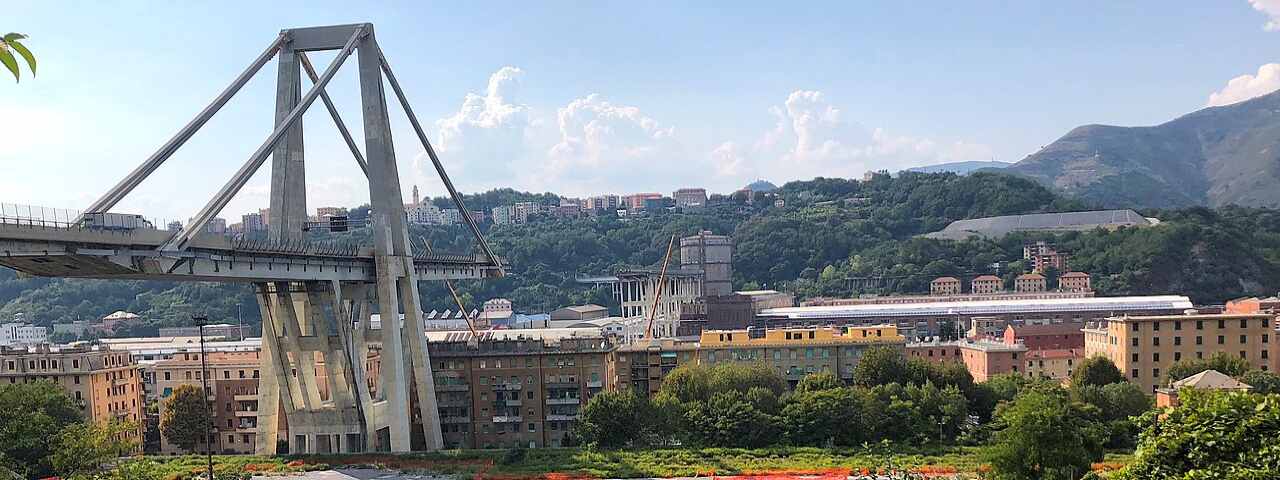
Major infrastructure projects such as Morandi Bridge, Brumadinho tailings dam, and X-Pian Xe-Namnoy dam don’t collapse because of one catastrophic mistake. They drift off course through a series of small issues, ignored warning signs, normalised risks, or nobody takes responsibility for acting.
In the lead-up to our final executive briefing of 2026, we’re looking at engineering failures from around the world that reveal a thousand ways to fuck up your project, and how we can stop the same mistakes happening again.
Known risks don’t disappear on their own
Some high-profile infrastructure failures can be traced back to risks that were already known but not adequately addressed.
Morandi Bridge collapse (Italy, 2018)
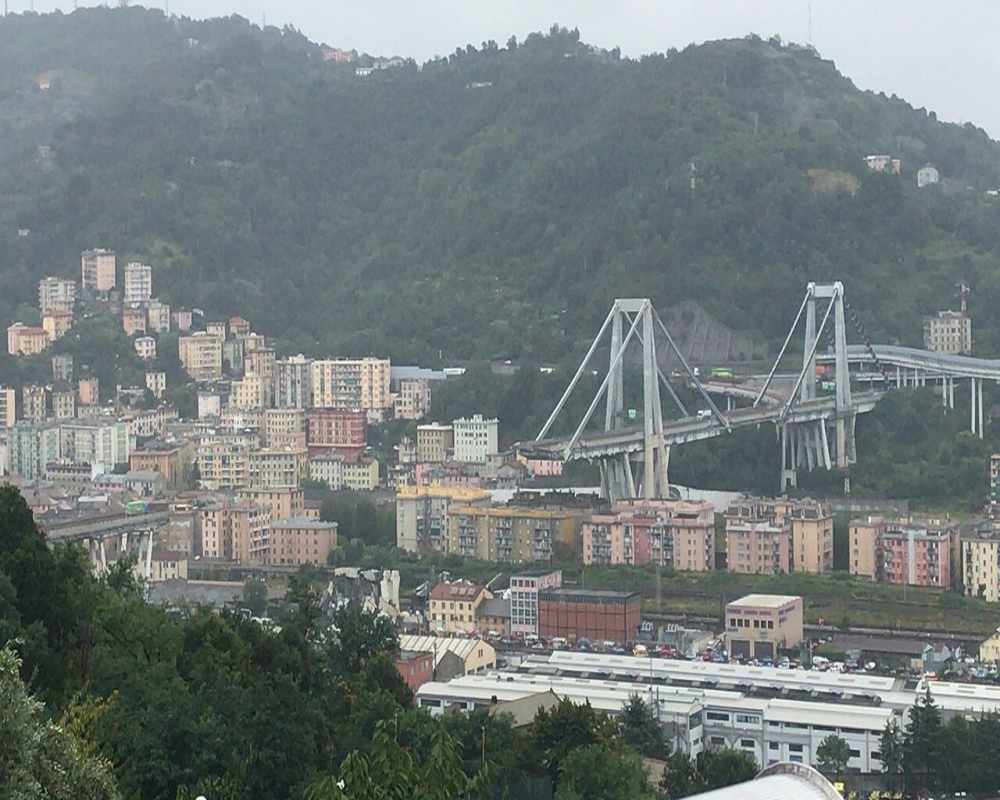
For years before its collapse, engineers had repeatedly voiced concerns about the Moraedi Bridge’s durability. Then a 200m section of the bridge collapsed in 2018, killing 43 and leaving 600 people homeless.
Investigations highlighted that long-standing warning signs had been flagged, including corrosion worsened by environmental exposure and pollution, inadequate inspections of the bridge’s durability and lifespan, and the challenges of managing ageing infrastructure.
FIU pedestrian bridge collapse (United States, 2018)
When the FIU Pedestrian Bridge collapsed during construction in 2018, six people lost their lives and several others were injured. The findings showed design errors in the bridge’s 11/12 nodal region, a critical connection between the bridge truss and deck.
In addition, large cracks had appeared before the collapse, but because of time pressure, work had continued before engineers had adequately reviewed the problem.
Old assets create new problems
Some of the biggest risks can come from assets that have been operating for decades and are no longer receiving much attention.
Brumadinho tailings dam collapse (Brazil, 2019)
The Brumadinho tailings dam collapse in Brazil killed 270 people when an inactive mining waste dam suddenly failed in 2019. Although the facility had stopped receiving new tailings years earlier, was being monitored, and had been certified as stable shortly before the collapse, investigations found that signs of movement within the stored waste had gone undetected because conventional monitoring failed to identify the subtle internal movements occurring within the stored waste.
The collapse led Brazil to ban new upstream tailings dams and tighten safety regulations, while driving stronger global tailings management standards.
Jagersfontein tailings dam failure (South Africa, 2022)
A similar pattern emerged in the Jagersfontein tailings dam failure in South Africa, where a tailings storage facility burst, flooding a nearby community, destroying homes, and causing fatalities.
Reports following the disaster found that the mining company and government authorities had received warnings from residents, workers, and local officials about potential risks. Yet the risks were not adequately addressed.
Oroville Dam spillway failure (United States, 2017)
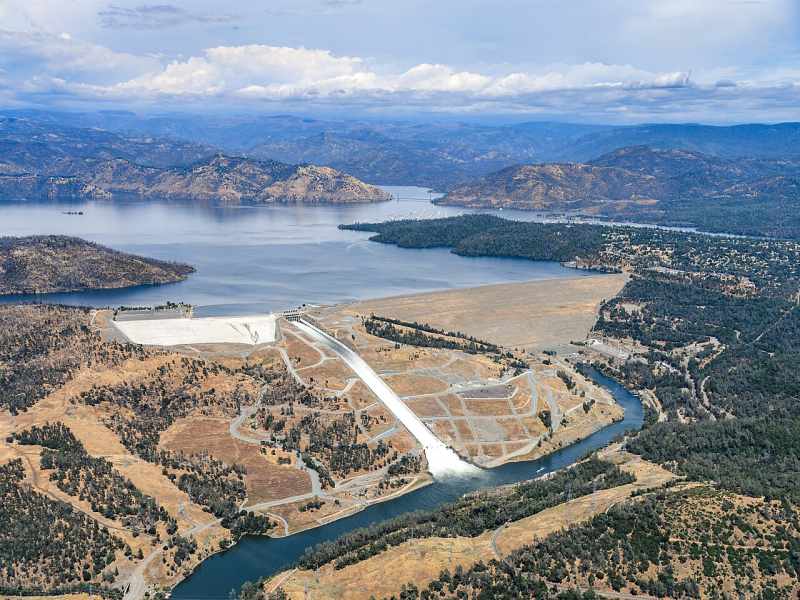
Severe spillway erosion in 2017 prompted the evacuation of around 188,000 people. Later investigations pointed to long-standing design and construction weaknesses, poor foundation bedrock, a deteriorating spillway chute, and a systemic failure to recognise and address underlying issues.
Engineering problems are rarely just engineering problems
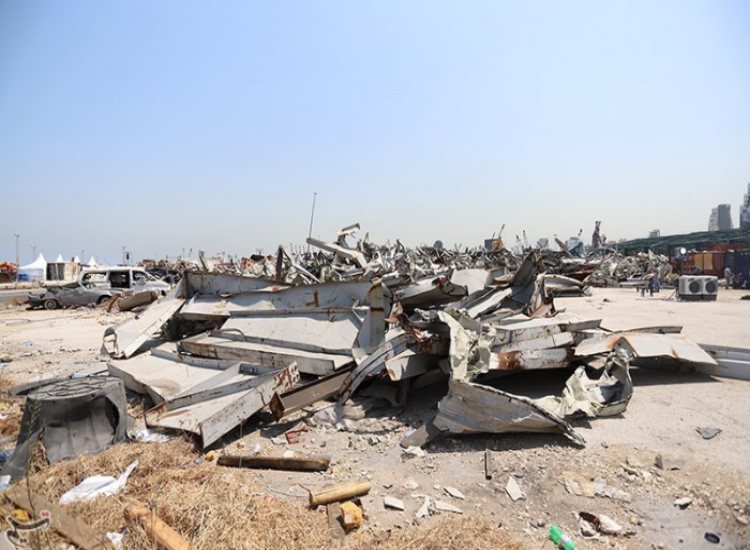
The underlying causes are usually more complex than a single engineering issue, but very often they are the result of the people in charge devaluing or outright ignoring the findings of their engineers’ technical reviews.
- Xe-Pian Xe-Namnoy Dam collapse (Laos, 2018): Exposed issues with design review, construction quality, and accountability.
- Beirut Port explosion (Lebanon, 2020): Showed how poor oversight and ignored risks can lead to disaster.
- Opal Tower structural crisis (Australia, 2018): Raised concerns about design coordination, construction quality, and building regulations, despite no loss of life.
In these three cases, engineering flaws were only part of the problem. Poor governance, weak accountability, and bad decisions made things worse.
Join Our Executive Briefing: A Thousand Ways to F*ck Up Your Project
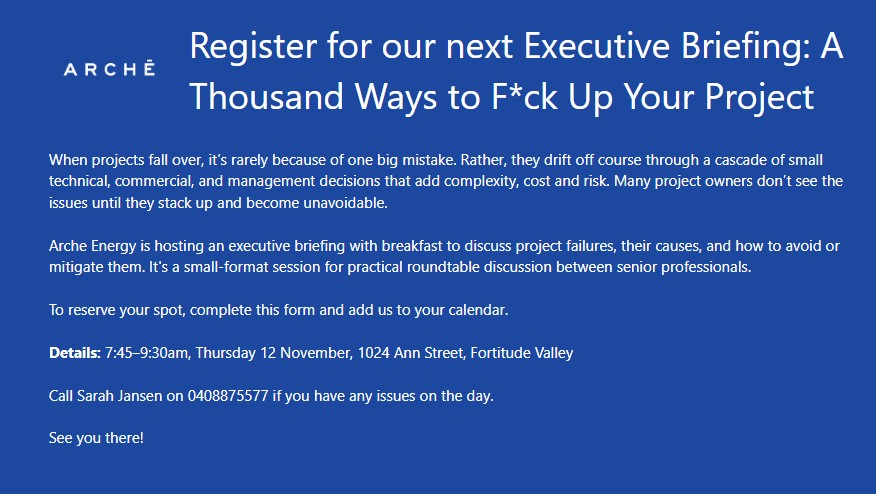
Looking across these examples, we can see a clear pattern emerges. The failures were rarely caused by a single technical issue. Instead, they developed through a combination of known risks, warning signs, organisational complexity, and delayed decision-making.
That’s the idea behind A Thousand Ways to F*ck Up Your Project, Arche Energy’s upcoming executive briefing exploring how projects drift off course, why warning signs are missed, and what can be done before issues become unavoidable.
It’s a small-format session for practical roundtable discussion between senior professionals. Seats are limited, reserve your spot!
- RSVP: Executive Briefing: A Thousand Ways to F*ck Up Your Project
- When: 7:45–9:30am, Thursday 12 November
- Where: 1024 Ann Street, Fortitude Valley
Questions on the day? Contact Sarah Jansen on 0408 875 577.